mkc law office

Peterborough's Law Firm Since 1974

view areas of practice

about us

Servicing Peterbourgh and Cottage Country

Continuing the law practices of:

Robert Claire McGillen (1946-2023)

P. Douglas Galvin (1935-2013)

Peter Millard (1945-2021)

Julie Kirkpatrick (Wills & POAs are with MKC Law Office)

CONTACT US

Blog

By Kirtus Evoy February 3, 2026
In Ontario, ODSP recipients are generally not permitted to hold more than $40,000 in non-exempt assets without risking their benefit qualification. As a result, receiving an inheritance—especially an unexpected one—can be stressful and confusing. Many recipients are left wondering whether the inheritance will reduce or interrupt their ODSP support. When families don’t know whether their intended-beneficiary collects ODSP or not, it can lead to the preparation of Will that includes no planning to structure the gift properly. When that happens, the beneficiary (or, if they are incapable, their legally appointed representative) must consider whether there are ways to protect the intended-beneficiary’s qualification for the ODSP benefits. The $40,000 asset limit applies to non-exempt property and funds. However, certain exempt assets are not counted when determining ODSP eligibility. If an inheritance is not planned properly, a recipient who wants to remain eligible can consider whether enough of the inheritance can be transferred into exempt assets. This would mean that their non-exempt total stays within the allowable $40,000 limit. Examples of exempt assets under ODSP include: An interest in a principal residence One motor vehicle Funds held in a Registered Disability Savings Plan (RDSP) A trust created by the ODSP recipient using inherited funds, provided the trust capital does not exceed $100,000 A pre-paid funeral Household goods and furnishings required for the reasonable enjoyment of a home There are a number of planning tools available to skillful Wills practitioners to assist in protecting a beneficiary’s entitlement to ODSP. Getting good advice early is crucial. - Ian Keay
By Kirtus Evoy February 3, 2026
Ontario’s Will validation rules are meant to prevent unfair outcomes where a person clearly intended a document to be their final Will, but the signing formalities weren’t perfect. However, there are limits — especially when the only “Will” is a digital, unsigned draft. A recent Ontario case, Madhani v. Fast, 2025 ONSC 4100 , is a reminder that an unsigned electronic will draft generally cannot be validated under Ontario law. The common scenario: lawyer takes instructions to draft a Will for a client lawyer prepares draft Will a signing appointment is booked the client dies before the Will is signed In Madhani , the draft Will was never printed and never executed. The draft existed only as an electronic file. Can the Court “validate” the draft anyway? Ontario’s validating provision is found at Section 21.1 of the Succession Law Reform Act (“SLRA”). Section 21.1 allows the Court to validate a document that does not comply with execution formalities provided it reflects the deceased’s testamentary intentions. In Madhani , the Court held Section 21.1 cannot be used to validate a Will that exists only in electronic form. Why not? Another piece of Ontario legislation, the Electronic Commerce Act, 2000 (“ECA”) explicitly limits the Court’s validating power. Section 31 of the ECA excludes Wills from electronic recognition. Section 21.1(2) of the SLRA explicitly makes Will validation subject to the Section 31 ECA exclusion. In short: Ontario law still requires a physical testamentary document for validation to even be possible. Testamentary intention still matters Nevermind the “electronic draft” problem, which is significant on its own. There must also be evidence before the Court that supports the digital draft was a valid reflection of the deceased Client’s fixed and final intention. Did the Client read the final draft? Did the Client sign the final draft? What evidence can be produced? Ontario courts often use the “deliberate, fixed and final intention” test drawn from George v. Daily, 1997 CanLII 17825 (MB CA). In Madhani , the draft Will was to be reviewed and confirmed at the signing meeting — only the signing meeting never happened – which means there was no evidence whether the draft Will reflected the deceased Client’s fixed and final intention. The Court was not quite reasonably unsatisfied. How this differs from other validation cases Ontario courts have validated wills with execution defects where the document was physical and clearly authentic, for example: Cruz v. Public Guardian and Trustee, 2023 ONSC 3629 Vojska v. Ostrowski, 2023 ONSC 3894 But those cases involved paper documents that were physically present and clearly connected to the deceased’s final intentions. Practical takeaways This case is a caution for both lawyers and families: Print important drafts (especially when a signing meeting is imminent) try to obtain direct confirmation from the client (not only through intermediaries) digital drafts on devices may not be legally usable as Wills in Ontario Bottom line Madhani confirms that Ontario’s Will-validation in Section 21.1 SLRA is helpful — but it is not a workaround for electronic-only drafts. Until legislation changes, a Will still needs to exist in physical form before Ontario’s courts can even consider validating it under SLRA s. 21.1.
By Kirtus Evoy February 3, 2026
When a loved one collects government benefits, there exists a risk that an inheritance could result in disqualification. Families want their loved one to live a safe, comfortable life after they’ve died — without accidentally causing them to lose their vital government benefits. In Ontario, one of the most effective legal tools for protecting the disabled loved one is with a Henson Trust. 1. When Helping is Actually Hurting Many people with disabilities receive government support, such as: i. ODSP (Ontario Disability Support Program) ii. Subsidized housing supports iii. Prescription / medical benefits (the “ Benefits ”) The Benefits are often based on the applicant’s financial eligibility. In simple terms: If the applicant has too much money / resources / assets in their own name, they may not qualify / lose access to the Benefits. So how do family members (often parents) leave an inheritance for their disabled loved one (often a child)? The inheritance risks preventing the disabled loved one’s qualification or else disqualification from their Benefits. 2. A Solution: The Henson Trust A Henson Trust is a special type of trust purposefully designed to help a person with a disability receive financial support without owning the assets personally. A key feature of a Henson Trust is that it is a fully discretionary trust. The parent appoints a trustee right in their Will. The parent also identifies the beneficiary, which would be their disabled loved one. The important concept for a Henson Trust is that the trustee decides: i. whether to make payments to the beneficiary ii. how much or how little to pay or whether to make a payment at all iii. when to pay iv. what the money can be used for The beneficiary (the person with the disability) does not have the legal power to demand the money. The trustee has total authority over the Henson Trust. The term “fully discretionary” references that discretion of the trustee in all decisions surrounding payments from the trust to the beneficiary. 3. How Does a Henson Trust Protect Access to the Benefits? When a Will includes a Henson Trust clause, it allows the money to be set aside for the disabled loved one without disqualifying them from their Benefits. This is because the fully discretionary nature of the Henson Trust means whatever assets are inside the Henson Trust are never considered to be owned by the disabled beneficiary: i. The trust owns the inherited assets ii. The trustee controls the inherited assets iii. The beneficiary receives only whatever help from the trust that the trustee decides in their sole discretion Only once a payment is made from the trust to the beneficiary does the beneficiary own the property, but only in the amount of the payment that is actually advanced. 4. What Can a Henson Trust Pay For? A Henson Trust can be used to improve quality of life. For example: i. Furniture, clothing, and personal items ii. A vehicle or transportation costs iii. Travel and vacations iv. Therapy not covered by ODSP v. Education, training, or courses vi. Recreation and hobbies vii. Better housing arrangements (depending on structure) viii. Technology (phones, tablets, accessibility tools) The goal is often to provide “extras” that the Benefits don’t cover. 5. The Trustee – Tell Me More These are the important considerations when creating the Henson Trust: i. The trustee is in charge of the disabled child’s inheritance ii. The trustee will: a. manage the money b. make investments c. keep statements / records d. ensure the rules governing the Benefits are not breached during the management of the Henson Trust iii. Who should be trustee? a. a sibling b. a trusted family member c. a trusted friend d. a trust company e. a lawyer f. an accountant iv. Should I appoint multiple trustees? 6. How is a Henson Trust Created? In this context, a Henson Trust is created in a Will. If parents have a disabled child who collects ODSP, then the parents make an appointment with their lawyer to draft their Wills. In the Will, the lawyer prepares a clause that causes the share of the estate destined for the disabled child to be placed in the Henson Trust rather than go directly to the disabled child. By doing so, the parent is taking the correct steps to protect their disabled child’s qualification for their Benefits. A Henson Trust can also be created during the parent’s lifetime – called an inter vivos Henson Trust – but this is outside the scope of this article. 7. Important Considerations i. ODSP in par ticular has rules about income / gifts received during a disabled person’s qualification – not following the rules will result in disqualification ii. Whomever is appointed trustee must be reliable – a poorly managed Henson Trust can result in all kinds of different problems, not the least of which is disqualification from the Benefits iii. Registered Disability Savings Plan (RDSP) is an investment that could be used by the Trustee – but is not typically used instead of a Henson Trust iv. If a person has a family member who: a. receives ODSP (or might in the future) b. is or could be financially vulnerable (i.e. susceptible to influence or exploitation) c. makes poor / questionable financial decisions d. requires support then a Henson Trust may make sense in those circumstances. 8. Final Thoughts on Henson Trusts A Henson Trust is about more than the money. It’s created by someone who wants to provide an inheritance to a vulnerable person in order to: i. preserve dignity ii. provide stability iii. provide necessary supports iv. avoid interruption of government supports v. ensure that the support provided endures for years and decades The best time to set up a Henson Trust is before the crisis occurs – you do not want to die and leave your executors / beneficiaries scrambling. A well-crafted estate plan will protect both your estate assets and your vulnerable loved one. - Ian Keay

areas of practice

We Can Assist You in the Following Areas:

Real Estate

For many people, buying a home will be the biggest transaction of their life, and the largest amount of money to which they will put their name.

Family Law

Dealing with family law is a difficult time. There are many complex issues, such as custody, spousal support, child support, matrimonial property, and dividing pensions.

Wills & Estates

You can’t know all the challenges your family will face in the future, but our estate lawyers will make sure you have taken all reasonable steps to protect your family and your legacy.

Business Law

MKC Law Office has been providing counsel to their corporate clients and ensuring compliance with the complex laws that govern businesses locally.

Litigation

The lawyers at MKC Law Office have represented their clients at every level of court: from administrative tribunals and small claims court to the Superior Court of Justice and the Ontario Court of Appeal.

THE LAWYERS

The Lawyers at MKC Law Office Can Get You the Results You Want
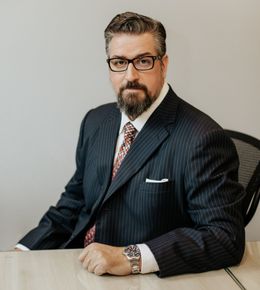
Ian Keay

partner

Ian Keay is the managing partner and practices in the areas of Real Estate, Business Law and Wills & Estates.


Read More

Oliver S. Cooper

partner

Oliver has focused his practice on courtroom litigation and client centered negotiation/settlement and collaborative law.


Read More

contact us

Get in Touch With Us Today